Featured categories






Potty Training Tips to Set You Up for Success
Your sweet little baby isn’t so little anymore. He or she is a pro at walking and is becoming more independent with each new day. Is it time to potty train?
Beginning the potty training process can seem like a big undertaking, and it is, but you’re not in it alone. Every parent will have to face the potty training hurdle at some point.
Here are some tips to help set you and your child up for success on this new and exciting journey.
Signs your child is ready for potty training
Successful potty training is all about timing. More important than your child’s age is his or her readiness to potty train. As any parent who has been in the trenches of potty training before will tell you, trying to force a child who isn’t ready to potty train will only lead to a prolonged process and plenty of frustration.
Before you make the leap from diapers to big kid underwear, look for these 10 signs that your toddler is ready.
- Your child shows interest in the toilet or underpants.
- Your little one wants to watch Mommy and Daddy go potty.
- Your child is able to stay dry in a diaper for two or more hours, and occasionally awakens with a dry diaper.
- He or she poops on a predictable schedule, such as in the morning, after meals or before bedtime.
- Your toddler complains about wet diapers, or removes his or her own diaper when it is wet.
- Your child is able to follow basic directions.
- They understand basic bathroom lingo.
- Through body language or words, your child is able to communicate when they need to go potty.
- They are able to pull their own pants up and down.
- Your toddler is able to sit down on and stand up from a potty chair.
Potty training tips
Once you recognize that your child is ready to begin the task of potty training, choose a potty training method to try, such as the “three day method,” the “training pants transition” or the “bare bottom” method. Keep in mind that every child is different, and there is no one perfect potty training solution. You may have to try a few different methods to see what works for your child.
No matter which potty training method you choose, here are some tips to help.
- Dress for success. Steer clear of difficult clothes like overalls or tricky buttons that can make getting undressed more difficult. Stick with pull-on shorts or pants that are easy to take on and off, or dresses that are easy to lift up. Be sure to stock up on underwear or training pants, as you’ll likely go through several pairs each day during the initial stages of potty training.
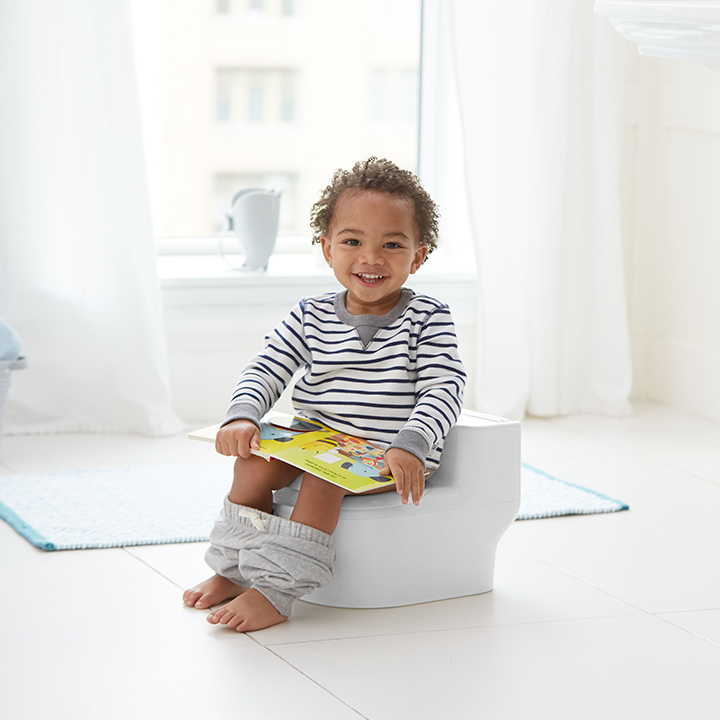
- Choose the right potty. When it comes to picking a potty for your little one, you’ve got options. Some children prefer potty training seats that attach to regular toilet seats, while others are more successful with their own potty chair. Choose what will make your child feel most comfortable and confident. Our Made for Me Potty has the look and feel of a grown-up toilet, including flush buttons with realistic sounds!
- Make a decision about pull-ups. Some children are more successful making the transition from diapers directly to underwear, while others do better with pull-ups as an in-between stage. There are pros and cons to both. Pull-ups mean less mess and allow you to begin potty training without worrying about your child having an accident at an inconvenient time or place. On the other hand, because pull-ups act like a diaper in pulling moisture away from the skin, some children are less bothered by a wet pullup than they would be wet underwear, which can prolong the process.
- Stick to a potty training schedule. At least in the beginning, it can be most helpful to set a timer for your child to go to the bathroom every 20 or 30 minutes. As your child starts having fewer accidents in between potty trips, extend the time until your child no longer needs a reminder to go potty. A potty training watch can be helpful for reminding your child that it’s time to go potty with blinking lights and music to get their attention in a fun yet gentle way.
- Go bare bottomed. If you’re attempting a quick potty training transition, try letting your child go bare bottomed. In doing so, your little one will be more aware of bodily signals and find it easier to rush to the potty than if he or she was wearing a pull-up or training pants.
- Offer plenty of praise. Find a reward system that works for your child and praise them for every success in your potty training journey. Children will respond better to positive reinforcement, and most little ones are eager to please, so be sure to remind your child how proud you are when he or she has success.
- Have patience. Potty training is rarely a breeze. Most parents will experience some frustration from time to time, but have faith that your child is learning. Stay patient with your toddler and provide gentle reminders to go potty throughout the day. Yelling, nagging or punishing for accidents can reduce self-confidence and slow the process.
- Keep expectations realistic. Some children pick up potty training quickly, but others will take longer. Do not worry about your child being behind if it takes you longer to potty train than you expected. While some kids are ready to begin potty training at age two, others are at least three years old before they’re ready. Don’t expect nighttime potty training to come as easily as it does during the day. Most children should be able to stay dry at night between the ages of five and seven. If your child has frequent accidents at night, consider pull-ups at bedtime.
Potty training isn’t a time most parents look forward to, and some even dread this developmental stage. But it is necessary, and even if it takes longer than you think it should, your child will eventually pick it up. Before you know it, you’ll be saying goodbye to diapers!